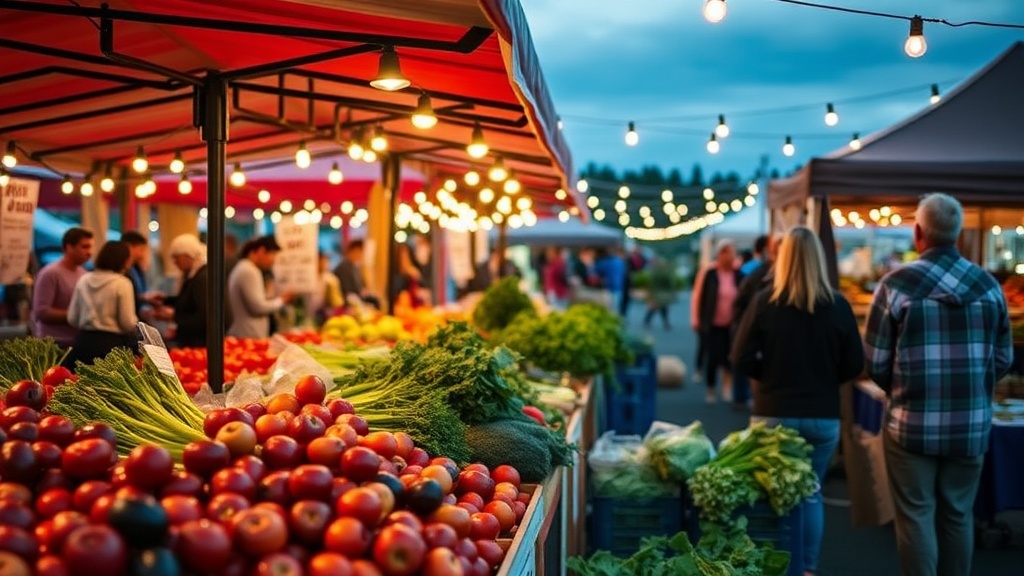
Community Farmers Markets Across Prince Edward Island Locals Love

Charlottetown Farmers Market - The Saturday Tradition
Cardigan Farmers Market - Eastern PEI Community Hub
Summerside Farmers Market - West End Gathering Place
Montague Farmers Market - Kings County Local Favorite
Souris Farmers Market - Eastern Gems and Fresh Finds
This guide maps out the community farmers markets across Prince Edward Island that locals actually frequent — where you'll find island-grown produce, handmade goods, and the kind of face-to-face commerce that keeps money circulating in our neighborhoods. Whether you're hunting for the earliest spring rhubarb or trying to track down fresh mussels from Malpeque Bay, these markets are where Prince Edward Island's agricultural heart beats strongest.
Where Can You Find Farmers Markets Open Year-Round in Prince Edward Island?
The Charlottetown Farmers Market on Belvedere Avenue operates every Saturday morning throughout the year — rain, snow, or shine. It's the anchor market for Prince Edward Island, housed in a purpose-built space that keeps vendors and shoppers comfortable even when the nor'easters blow through.
Winter markets matter here. Our growing season is short. The catch? You can't survive on preserved goods alone, and Prince Edward Island farmers have adapted. Greenhouse operators like Andrews Greenhouses supply fresh greens in February. Root cellars keep carrots and potatoes crisp through March. The year-round market at Charlottetown maintains roughly forty vendors even in the depths of winter — down from summer highs, but still substantial.
Here's the thing about winter shopping at the Charlottetown market: it's slower. You'll have time to chat with Brian from Riverview Farm about why his stored apples stay crisp, or learn the proper way to cook celeriac from vendors who've grown the stuff for decades. There's a rhythm to it that big-box grocery stores can't replicate.
Which Prince Edward Island Farmers Markets Feature Local Seafood and Meat?
Several markets across Prince Edward Island specialize in protein — fresh catches from surrounding waters and pasture-raised meats from island farms. The Charlottetown Farmers Market maintains the widest selection, but smaller community markets often feature hyper-local specialties you won't find elsewhere.
The Summerside Farmers Market (located at the Causeway Bay Convention Centre) runs Saturday mornings and draws heavily from western Prince Edward Island producers. You'll find Malpeque oysters there — yes, the same ones that won the 1900 Paris World Fair competition. There's a vendor who sells fresh lobster rolls on-site during season. Another specializes in grass-fed beef from the Ellerslie area.
Worth noting: the Culinary Trail isn't just for tourists. Locals use it to locate specific producers, and many of those producers sell at markets before anywhere else. Here's how the major protein sources break down across Prince Edward Island's primary markets:
| Market | Fresh Seafood | Grass-Fed Beef | Pastured Pork | Free-Range Poultry |
|---|---|---|---|---|
| Charlottetown Farmers Market | Yes — multiple vendors | Yes — 3+ farms | Yes — seasonal | Yes — weekly |
| Summerside Farmers Market | Yes — Malpeque specialties | Yes — western PEI farms | Limited | Yes — pre-order |
| Montague Farmers Market | Yes — Georgetown area catch | Limited | No | Yes — seasonal |
| Borden-Carleton Market | Yes — mussels, oysters | No | Yes | No |
The Montague Farmers Market operates Thursday afternoons in the Armoury building on Main Street. It's smaller — maybe fifteen vendors on a busy day — but the eastern Prince Edward Island connection means access to seafood that was swimming yesterday. The Georgetown wharf is twenty minutes away. That proximity matters.
What Produce Is Actually in Season at Prince Edward Island Farmers Markets?
Understanding the seasonal calendar keeps expectations realistic and food dollars local. Prince Edward Island's climate limits fresh produce to a roughly six-month window — May through October for most items — but what we lack in duration, we make up for in intensity.
May brings rhubarb and asparagus. June explodes with strawberries from farms like Berry Patch on the Dunk River. July delivers new potatoes — the first small, waxy tubers that barely need butter. August is tomato saturation, corn sweetness, and the beginning of apple varieties. September means squash, root vegetables, and the late-season push before frost.
That said, don't expect avocados. Or bananas. Or citrus. Prince Edward Island farmers markets sell what grows here — and that's part of the point. You're buying food that hasn't traveled thousands of kilometers. The carbon footprint is minimal. The freshness is maximal.
Here's a practical breakdown of what to expect and when:
- Spring (May–June): Asparagus, rhubarb, greenhouse tomatoes, early greens, herbs, honey, preserves from last season
- Summer (July–August): New potatoes, strawberries, raspberries, blueberries, field tomatoes, sweet corn, zucchini, cucumbers, fresh-cut flowers
- Fall (September–October): Storage crops (potatoes, carrots, beets, turnips), winter squash, apples, late-season berries, dried beans
- Winter (November–April): Root vegetables, greenhouse greens, preserved goods, baked items, crafts, meat, seafood, frozen berries
The Borden-Carleton Farmers Market (located at the Gateway Village, right off the Confederation Bridge) operates seasonally — typically July through September — and serves as many locals as it does bridge traffic. Don't let the tourist-heavy location fool you. The vendors are Prince Edward Island residents selling to Prince Edward Island residents. The potatoes come from Emerald. The mussels from Cascumpec Bay.
How Do Prince Edward Island Markets Support Local Artisans and Crafters?
Farmers markets across Prince Edward Island function as incubators for small creative businesses — woodworkers, fiber artists, jewelry makers, potters. These aren't hobbyists killing time. They're entrepreneurs testing products, building customer bases, and often launching permanent retail operations.
The Charlottetown market dedicates significant space to non-food vendors. You'll find hand-thrown pottery from studios in Victoria-by-the-Sea. Wool products from sheep raised in Morell. Wooden toys crafted from island hardwoods. Leather goods. Soap made with Prince Edward Island goat milk. The variety surprises first-time visitors — and keeps regulars coming back.
The catch? Space is competitive. Markets maintain waiting lists for vendor spots, particularly during peak summer months. Quality standards are enforced — no mass-produced resale items allowed. Everything must be made, grown, or raised by the seller (or by a defined geographic partner, in some cases).
Smaller markets often feature stronger craft representation proportionally. The Tyne Valley market (operating during summer months behind the Community Sports Centre) might have only eight vendors total — but three could be artisans. Same with the Souris Market, held at the Eastern Kings Sportsplex. These community gathering points matter in rural Prince Edward Island, where studio retail space is scarce and online marketing reaches only so far.
What Should First-Time Visitors Know About Prince Edward Island Market Culture?
Arrive early for best selection — especially for limited items like wild blueberries or fresh scallops. Bring cash, though most vendors now accept cards and e-transfers. Bags aren't automatically provided, so bring your own (or purchase reusable totes sold by several markets).
Prince Edward Island market culture runs informal but respectful. Vendors remember faces. They remember preferences. They'll set aside items for regulars. They'll text when something special comes in. Building these relationships takes time — but the payoff is access to products that never hit the public tables.
Markets also serve as community information hubs. Lost pets get posted on bulletin boards. Local events are announced verbally. Political petitions circulate (sometimes controversially, sometimes not). The Charlottetown market even hosts live music some Saturdays — local musicians playing for tips and exposure.
Here's the thing about "supporting local" — it's become marketing jargon everywhere. In Prince Edward Island, it's structural. Our economy depends on it. When you buy a fifty-pound bag of potatoes from a vendor who grew them in Clyde River, you're not making a statement. You're just shopping. That's the baseline expectation here. The farmers markets make it easy to meet that standard.
The markets listed here represent the core network — Charlottetown, Summerside, Montague, Borden-Carleton, Tyne Valley, Souris. Smaller pop-up markets operate seasonally in communities like Kensington, Alberton, and O'Leary. Watch for flyers at the post office. Check community Facebook groups. The best finds often happen at markets too small for websites but large enough to matter to the neighborhoods they serve.